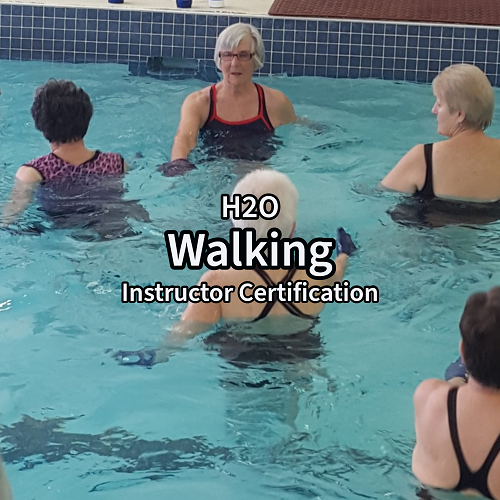
Clyde shares her expertise with WaterART teaching, focusing on the importance of agility, flexibility, agility and mobility as we age. She explains how water exercises can improve essential physical skills like stamina, strength, balance, coordination, and range of motion. Clyde discusses various walking techniques and the significance of muscular agility, strength, and balance, providing strategies to enhance safety during water activities and reduce the risk of falls (on land) by training with WaterART exercise for life.
What is Functional Movement and Why is it an Important ?
Functional Movement is defined as the type of movement that is capable of serving the purpose for which it was designed. Therefore the goal of any fitness program, whether in water or on land, should be designed to help and improve movement required for general daily use, commonly referred to as ADL’s (activities for daily living).
- Research suggests that sixth decade of life is the point in time when losses of muscular strength, size and function are most dramatic (Pollock et al.)
Did you know that many people retiring today can expect to live another 35-40 years? No wonder it is important to maintain function. Years ago a retiree was awarded the “golden handshake” and expected to go home to sit on the swing on the front porch and (basically) do nothing. Not so today ! Very few retirees people sit around anymore. Retirement opens up opportunities: some people love to travel, some take up a new career, others simply want to stay active around their own home or enjoy their family and friends. The one common denominator for all the above is that, in order to engage in and enjoy these activities, each person needs to maintain a certain degree of fitness. There can be a wide range of fitness levels with such a variety of people and this provides a challenge for instructors to design safe and effective programs for the many skill levels that comprise this group.
Most 55-75 years olds can keep doing what they normally have done in the past. Once past this milestone the 75-85+ year old group may start to notice mobility differences which can cause limitations for their independent lifestyle. After age 85 years of age many people develop some concerning health issue(s) and/or limitations.
So, no matter the age of the participant, it is important to include a lot of functional movement in each program. Functional training will stretch and strengthen the muscles to assist the body to move in the most efficient and least stressful manner.
There is no magic pill for function. Essentially, if you don’t challenge muscle strength, agility, balance, mobility and flexibility = the body will lose muscle strength, agility, balance, mobility and flexibility which equals loss of function.
What are Some Activities of Daily Living or ADL’s that can be easily trained in the pool?
- Shopping at the mall, Crossing the street , Hurrying through the Airport
- Stair Climbing, Getting in and out of a car, Getting on and off the tour bus
- Carrying Groceries, Lifting laundry,
- Bathing, Getting In and out of the Shower/Bath
- Brushing hair, Dressing
- Cooking, Cleaning – vacuuming, dusting, moving things
- Raking leaves, Shoveling snow, Cross country skiing
- Walking to the mail box, Walking the dog
- Playing with the grandkids, sports activities
- Dancing
All of the above activities require a certain amount of movement involving the body as a unit. . These are the movements that will help maintain function.
Posture:
To perform functional movement successfully the first requirement is to re-train the body to maintain posture. This helps to distribute weight more evenly over the skeletal system to place the least amount of stress on the supporting joints. All exercises to train for better posture will automatically help retrain both balance and core strength.
There Are Two Types Of Balance – Static Or Dynamic.
Static balance requires holding the body still in one position, so something as simple as inserting some body checks or yoga poses into a program will help train for this.
Note: Be sure to add some thermal sets before and after static balance training especially if you are working in a cooler pool.
Dynamic balance is required when the body has been moving and comes to a sudden stop. For example: starting to cross the road then realizing a car is coming calls for a quick safety stop. This acts as a “surprise” to the body and requires an immediate balance adjustment.
Dynamic balance can be trained using any basic movement then inserting an unexpected body check exercise. At first demonstrate to show how the arms must be utilized to assist balance and support in the water. Later, teach progressive levels to “body-check” for balance and stability. Cues can be given to stand on one foot or lift hands out of the water, and so on, as skill levels increase.
The number one reason for training for function is to help clients maintain mobility. Here are some tips to help clients train in a functional manner with water exercise.
- Keep people active throughout a program – stay warm
- Imitate daily activities in the water
- Train the muscle groups that provide the correct movement for these activities
- Incorporate changes of direction and agility moves
- Retrain the fast twitch muscle fibres (these are lost as we age)
- Include a variety of progressions to maintain or improve present levels of fitness for those already active
Before you Start a Program:
Be aware of Health Conditions. In a group class for mixed ages and fitness levels there will be a variety of health conditions to consider. These can include arthritis, a partial or total hip or knee replacement, lower back problems, diabetes, multiple sclerosis, heart problems and many more. Additionally there maybe people who live alone and, besides coming to maintain fitness, also come to class for the social aspect. Whatever the reason for coming, encourage everyone to do as much as they can at their own pace. Advise stopping if pain exasperates or increases.
Note: pain and discomfort is subjective, so check in from time to time to make sure that everyone is working at their preferred level of intensity. Always work through good range of motion to target the muscle through its full length. A long muscle is a stronger muscle.
Dress to stay warm and safe!
Encourage your participants to wear appropriate water wear to stay comfortable in the pool. If the water is cool suggest “add-on” clothing i.e. wearing a polyester shirt or tights, a thermal vest or a cap or hat.
Advise participants to wear shoes to prevent slipping and improve stability.
Suggest aquatic mitts and explain their primary use is to enlarge the area of support for the upper body and help with balance.
Train Participants with necessary skills –
- How to enter and exit the pool safely
- Recovery to standing position
- Sculling for balance and movement
- Walking with correct foot action
- Discovering the buoyancy and resistance of water
- Using water for assistance and resistance
- Finding correct water depth
- Demonstrate the WaterART working positions to modify or increase the intensity for the same basic moves.
- Give Permission to go at own skill, speed and comfort levels
One final note: All clients should partake in a screening process of some sort. Typically with group exercise – asking clients to disclose any discomfort or limitations and telling them to always work within their own comfort limits with all exercise. Helping everyone to move at their personal best self paced level is key to exercise safety. Also, always know who the non-swimmers are in all programs so that the Instructor may set boundaries for their comfort and safety.